
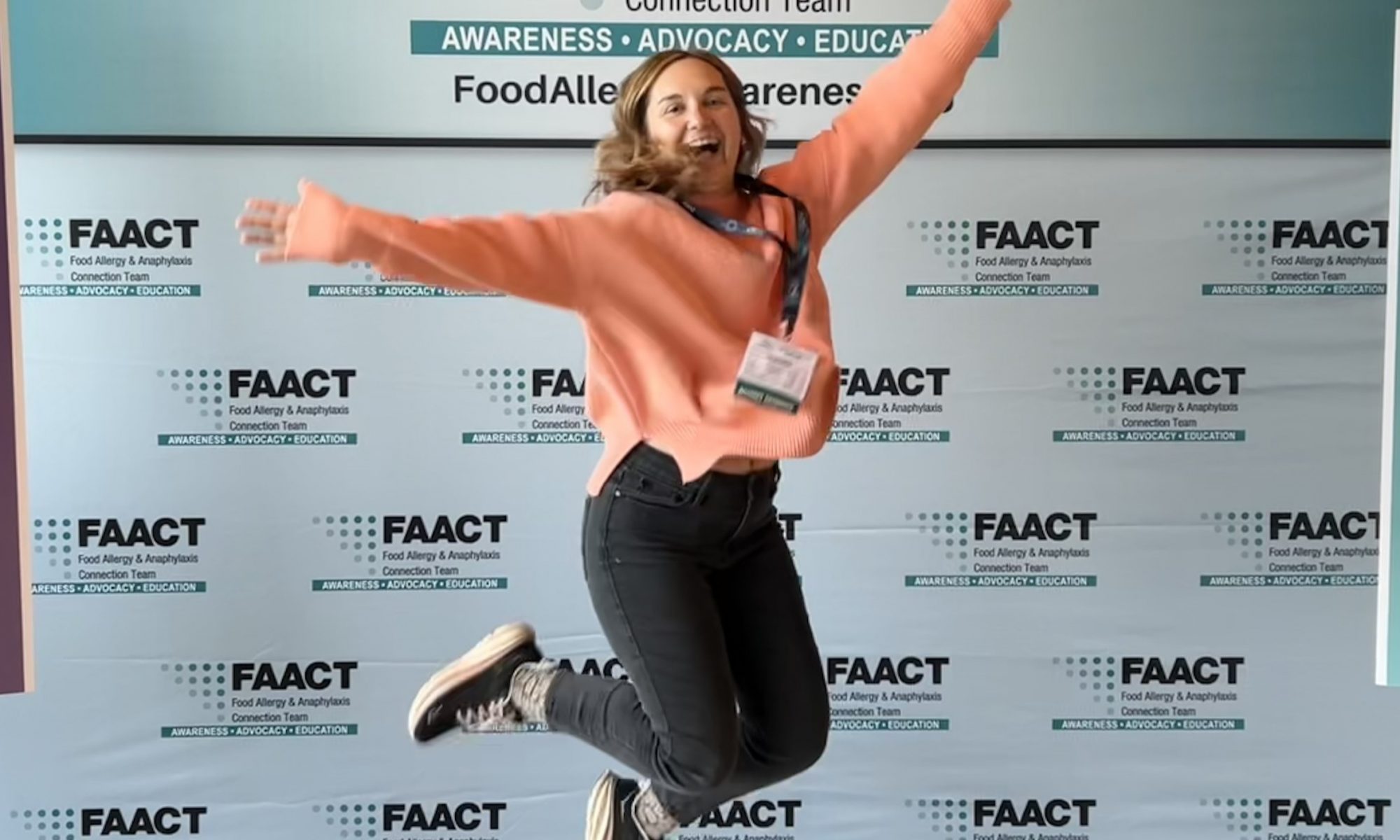
Speaking up for myself was never my strongest skill.
As a child, I was very much a follower. I wanted to blend, be liked, avoid making waves.
Speaking up for others, however, always came naturally for me. It was who I am. Before age 12, I was already a member of PETA (People for the Ethical Treatment of Animals) and had organized a neighborhood Kentucky Fried Chicken boycott. Soon after, I visited a Florida manatee rehabilitation center and started sending my weekly allowance to a manatee I “adopted” named Rosie. I was always looking for ways to advocate for causes I believed in. A forever learner, I was always dabbling in many interests and reading about many topics new to me.
For more than 25 years I thought my peanut allergy was a story of everything I couldn’t do. It made me feel isolated. I didn’t understand my own body. I felt betrayed by it. I was the little girl who wanted the same bagged lunch as everyone else. The kid who could never have the cake or the ice cream. The college student turned sleuth, trying to figure out if peanuts were going to make their appearance at a dorm party. The young woman dating who couldn’t just lose herself in an unexpected kiss, but needed to know exactly what her date had eaten that day.
The irony here?
I never expected living and growing up with a food allergy, an invisible disability, would eventually help me find my voice and advocate for myself, as well as others.
I Thought I Was Sharing Information.
In my mid-twenties, I experienced extreme frustrations and personal lows because of the lack of U.S. food labeling laws, particularly the confusion around peanut cross-contact. I had a pivotal moment when I’d eaten from a bag of individually wrapped chocolates over the course of a week, then had an unexpected allergic reaction to the last two chocolates in the bag.
In hindsight I should’ve used my epinephrine, but at the time I was too afraid to use it. I took a ton of Benadryl to ‘control’ the reaction, and I admit, I was lucky. At this time I was having allergic reactions often, sometimes a few times a week, so that added to my fear of using my very expensive epinephrine. It was a different time back in 2013, and information wasn’t as widely available. We knew less.
Today with my 2026 knowledge I’d handle things very differently.
I couldn’t understand why I reacted to the chocolates. Peanuts were not labeled in the chocolate ingredients, and only two pieces from the entire package caused a reaction. There was no precautionary allergen statement, so I thought that meant there was no chance my allergen could be in the candy.
What it actually meant is that precautionary allergen labeling is not mandatory. It’s completely voluntary. I learned a harsh, surprising lesson about cross-contact and it sent my anxiety into overdrive.
The game changer for me was learning to read food labels differently and becoming much more proactive about contacting manufacturers to ask if their facilities used my allergen. It helped me dial down my food allergy anxiety and have fewer allergic reactions. This was life changing.
Once I found a way of navigating labels that worked for me, I wanted to shout it from the rooftops to anyone who would listen. I started my blog, Invisibly Allergic, in 2017 to share the labeling information my research uncovered.
I thought I was simply sharing information to help others. What I didn’t realize was that I was finding my voice.
My Allergy Story Was Bigger Than I Realized
When I began working towards my food allergy memoir in 2019, I assumed writing would mostly be documenting what I had learned over the years.
Instead, it forced me to look at my allergic life with fresh eyes.
Experiences I had always thought of as isolated ‘me experiences’ actually connected me in a very personal way to civil rights history, disability history, and the history of food allergy-related policy. Much of this history has unfolded during my lifetime, yet I never realized how it shaped my own experiences until I started writing my story.
For more than two decades I had felt like I was navigating my peanut allergy in a silo. I knew other people had food allergies, but I didn’t see myself reflected in anyone else’s experiences. I thought a lot of the little things I dealt with were just part of my own life, things I had to figure out on my own that others would not understand.
It wasn’t until social media became a bigger part of my life that I began seeing other people living in the food allergy space — just like me. Someone else was talking about the awkwardness of dating with a food allergy. Someone else was talking about parties, travel, labels, restaurants, workplace accommodations, fear of self-administering a needle, confusion around what symptoms require epinephrine, and the mental gymnastics that come with trying to stay reaction-free.
Realizing this made me feel less alone.
I saw myself in them, and them in me. I saw others with the same invisible disability living with so much confidence that it boosted my own confidence. It gave me permission to ask for what I need, without second guessing or apology, to stay safe.
My life began to feel more optimistic.
It also made me want to share the food allergy experience with the general public. I felt that sharing these everyday experiences could help someone else feel understood, while also helping people outside of the food allergy community understand what we are actually up against daily. This became a big part of the why behind my book.
I didn’t just want to tell my own story. I wanted to help connect individuals, with and without allergies, and their experiences to the bigger food allergy picture — especially in a way where the food allergy narrative is taken seriously and not made into a joke.
Suddenly, I Was A Food Allergy Advocate
Putting ‘pen to paper’ to write about my food allergy reactivity and daily life made me see how I’d downplayed my allergy experiences to myself.
“It’s not worth telling them about my allergy.”
“Maybe most of it is in my head.”
“I don’t want to say anything because I don’t want to burden anyone.”
Writing it all down actually forced me to confront uncomfortable truths about my life.
“My food allergies are life threatening.” My peanut allergy is truly life or death.
“Cross contact is real.” It’s not a figment of my imagination. It lurks and ambushes you. It can happen anywhere and everywhere.
“Our food allergy labeling laws are terrible.” We all have a right to know what’s possibly in our food.
“Feeling frustrated and anxious at times is valid.” I matter. It’s okay to get frustrated.
Experiences I once categorized as “trauma” or “frustration” morphed into showing myself that I have resilience, am adaptive, and a creative problem solver. I noticed positive patterns in myself that I didn’t see while simply living through them. Writing my journey down made me see all the growth from my struggles with new and welcome clarity.
I wanted others to know these things, not for my own sake, but for everyone’s sake. One in every ten adults has a food allergy, and one in thirteen children. Those aren’t small numbers!
My book is a helpful bridge between the food allergy community who live allergic life every day, and those who don’t understand it and/or aren’t aware of food allergies.
Everyone Has A Story Worth Sharing
Everyone has a story worth sharing, whether you share it with a small group of close friends in conversations, or in a larger way that is beyond your social circles.
Advocacy can happen through one-on-one conversations at your dinner table with friends and family, and often not feel like ‘advocacy’ at all. Maybe it just feels like validation. It can be with your child’s school, where you work, in speaking with restaurant staff — in whatever way feels comfortable and makes you feel proud. This is something I focus on in my book, Invisibly Allergic.
(1) Don’t minimize what you know or need.
If something affects your safety, well-being, or ability to participate, it matters.
(2) Speak up before you reach your breaking point.
Asking for an accommodation can often take less energy than quietly worrying to yourself time and time again. I try not to assume how someone will react and let them have the opportunity to accommodate me first before assuming it can’t be done.
(3) Look for people who understand.
Finding others with similar experiences can calm your nervous system. If you’re online, the online social media community can connect you with people who will understand you. If you can, search to see if any in-person, free meet-up groups exist in your local area! I co-host one for those with food allergies, chronic conditions, and autoimmune diseases in my community in Louisville, KY.
(4) Remember that your story belongs to you.
You get to decide how much you share, with whom, and in what way. When it feels right, sharing with others may make you feel seen, and in turn, help others feel seen!
(5) Don’t underestimate small acts of advocacy.
Just a short email exchange or a few minute conversation can change someone’s understanding of allergic conditions, possibly even their trajectory.
I spent years trying not to let my peanut allergy take up too much space in my life, though it shaped almost all of my choices. I didn’t set out to become a writer and someone with a voice speaking up for change in the food allergy community and in allergy policy. I was simply trying to figure out how to live comfortably and safely.
I can see now that the very thing I worked hard to minimize became the path to something I never planned on: finding my voice to help our community and others who may not have a voice or feel empowered to use it.
The truth is, your unique story, no matter the subject, will help someone else feel valued, feel seen.
Sharing my story helped me take my own insecurities around my food allergy, along with my anger and frustrations around the lack of policy protections in the U.S., and funnel them into something tangible that someone can hold, take to work, read on their lunch break, read before they go to bed, or read on an airplane. It exists now in a format where someone can request it at their library and get it for free.
I published my book knowing that my story was never only mine. (And it still gives me goosebumps to realize that the loneliness I once felt is no longer my reality.)

Invisibly Allergic, the book and the blog, is now bigger than me.
While my food allergy and my reactivity are individual to me, the issues surrounding them are collective. Invisibly Allergic connects:
- Children growing up with an allergy or disability today
- Parents trying to protect their food allergic kids
- Adults who feel unseen in their chronic illness
The need for greater accessibility, accommodation, and inclusion in society as a whole
At its heart, my book Invisibly Allergic: A Memoir of Survival, Advocacy, and Change is about recognition and positive change, speaking to the 33+ million Americans with food allergies, and those who love them, through strategies and validation often missing from medical and community discussions.
When I set out to write my book, I thought I was putting my own story in one place. What I discovered was that my story was connected to thousands of others’ stories. Writing helped me see myself as one small cog in a larger movement and it encouraged me. I want readers of my book to feel like they could be a part of the changes they wish to see in the world… food allergy, food intolerance, celiac, or otherwise.
We all have our own differences and challenges, and that has become something I find celebratory instead of something to downplay or be ashamed of. Diversity is beautiful, interesting and necessary. Diversity improves everything.
Whether you live with food allergies yourself, love someone who does, or simply want to better understand the invisible experiences so many people navigate every day, my hope is that somewhere in these pages, you’ll find not only my story, but a piece of your own.
I’d love to connect and learn your story, too. Find me at my website. Follow me on Instagram and Facebook. You can order my book here, too!
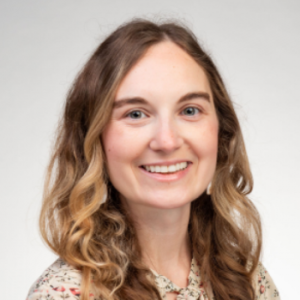
About the Author: Zoë Slaughter is a food allergy advocate and author based in Louisville, Kentucky. After a traumatic, near-death anaphylactic reaction, Zoë founded her website Invisibly Allergic to raise awareness of unspoken gaps in US food labeling laws and to advocate for greater ingredient transparency. She shares free allergy resources, insights, and advocacy efforts through her website and social media. In addition to writing her food allergy memoir, she wrote and illustrated a children’s book as a “love note” to her rescue beagle, Colby. Zoë is a life-long vegetarian and still considers herself an animal rights advocate in addition to her disability rights and food allergy advocacy journey. In her free time she enjoys rockhounding, foraging, crafting, and drinking lots of herbal teas.
Images: Courtesy of Invisibly Allergic
Resources
- Book: Being Heumann by Judy Heumann (*Being turned into a movie!)
- Documentary: Crip Camp (2020)
- Book: The Invisible Kingdom by Meghan O’Rourke
- My Health & Disability Book List
- My Website: Invisibly Allergic
- A special thanks to my mentors: Jason Linde, former FARE SVP, Government & Community Affairs, Eleanor Garrow-Holding, President and CEO, FAACT, and Dr. Ruchi Gupta, author of Food Without Fear, and Director of CFAAR